Getting to Niseko: the airport bus, the train, and which one is a mistake
New Chitose is the airport. From there it is about three hours by ski bus, or two trains and a wait. The choice is less about time than about what happens if you get it wrong.
Jun Uchiyama · Last updated September 2026
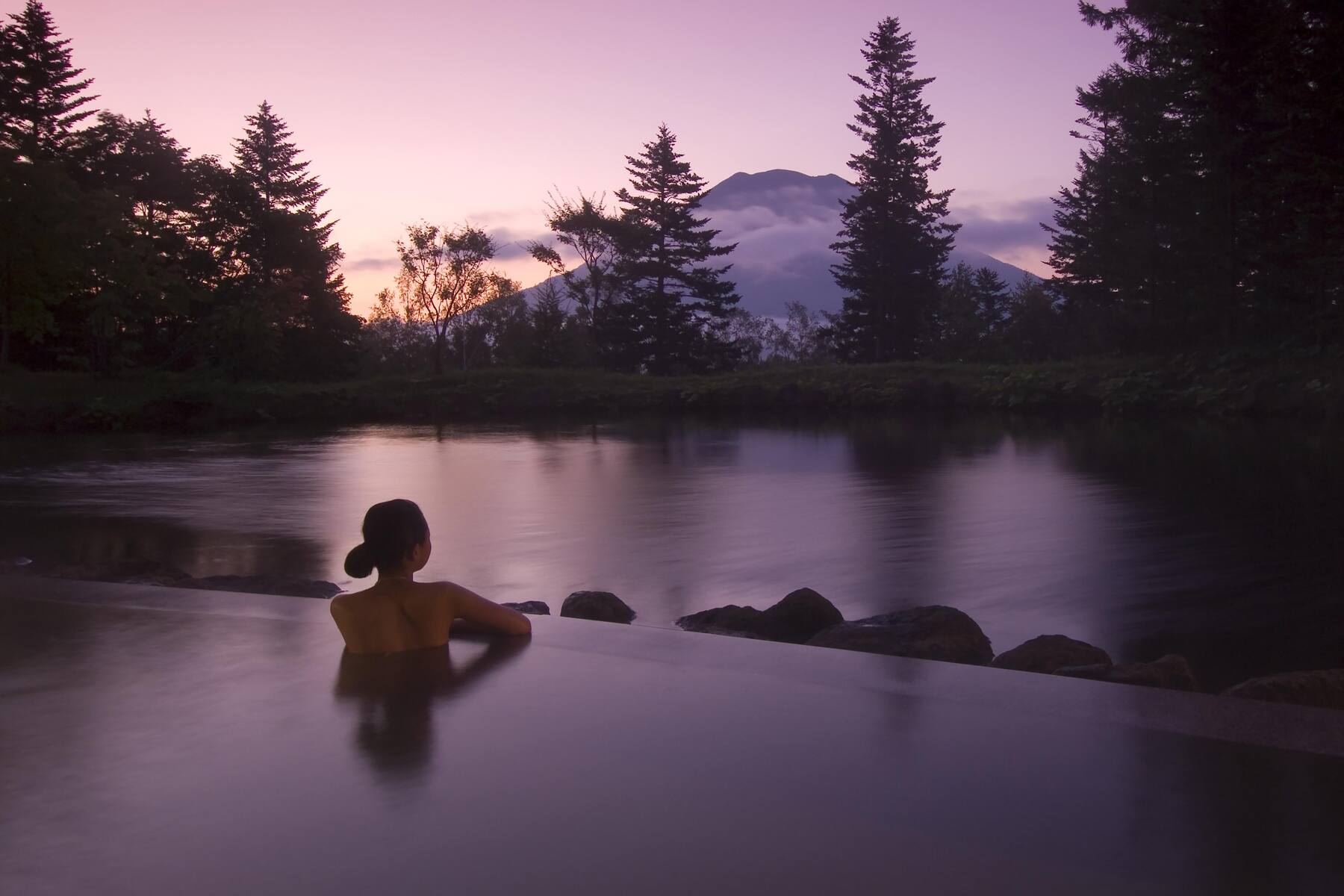
There is no airport at Niseko. Everyone flies into New Chitose (CTS), on the far side of Sapporo, and then travels about three hours west. That leg is the part of a Niseko trip people most often get wrong, and the mistake is almost never about time. It is about arriving after everything has stopped running.
The decision has three parts, and they are best taken in this order: which mode, which arrival time, and which stop you get off at. The third one sounds trivial and is the one that most often ends a long travel day badly, because “Niseko” on a bus timetable and “Niseko” on your booking confirmation are not the same place.
The two real options
Figures below are from the Niseko Promotion Board’s own access page, read on 10 September 2026. Bus operating periods change every season — confirm the current dates before you book flights around them.
The ski bus
The seasonal Chuo Bus service runs from New Chitose Airport to Niseko Annupuri in about 2 hours 56 minutes, listed at ¥6,000 one way for an adult and ¥3,000 for a child. The previous season’s timetable showed four daily departures, from mid-morning to mid-afternoon.
From JR Sapporo there is a parallel service of roughly 3 hours, with two morning departures, priced as a ¥10,000 adult round trip.
Two other operators run airport transfers on this route: the White Liner, and the Hokkaido Resort Liner.
The bus is a winter service. The previous season ran mid-December to late March. Outside that window it does not run at all, which is a large part of why summer visitors find Niseko harder to reach than they expect.
What the bus buys you is not speed. It is the absence of transfers. You put ski bags in a hold once, you sit down once, and you get out in the area you are staying in. With equipment, that is worth more than the twenty or thirty minutes a theoretically faster routing might save, and the gap widens with every extra person in the party.
The train
New Chitose Airport → Otaru on the Rapid Airport Express, about 72 minutes. Otaru → Niseko on a local train, about 90 minutes, through Kutchan. From Sapporo the first leg is about 32 minutes instead.
The operator’s own page carries a warning worth repeating: train services are limited. This is not a metro. Miss a connection and the next one may be a long way off.
Two further things the timetable does not say. The transfer at Otaru is a real transfer — platforms, luggage, and a wait whose length depends entirely on which train you came in on. And the local line onward is a rural service with the carriage capacity of a rural service, which is a different experience in February with boot bags than the same line is in July with a daypack.
Which one is a mistake
For a first winter trip with ski luggage, take the bus. It goes direct, it is timed around flights, and it sets you down in your accommodation area rather than at a station you then have to get out of. Two trains with boot bags and a transfer at Otaru is a worse hour of your life than the map suggests.
Take the train if you are staying in Kutchan town — the station is the point of staying there — or if you are travelling outside the bus season, or if you would simply rather see the coast road than a bus window.
That first exception is the substantial one. Kutchan is the municipal seat: the station, the supermarkets, the hospital, the shops that exist because people live there. It has the lowest median five-night peak price of the five areas at ¥521,710, and its lower quartile is ¥253,547 — roughly half Hirafu’s (figures read from each property’s Booking.com listing; the room type and guest count are whatever that property was quoting as its cheapest at the time, not a fixed configuration). The trade is that you take a bus to the lifts every morning and back every evening, about 5 km each way to central Hirafu. If you have already accepted that trade, arriving by rail is not a compromise; it is the natural way in.
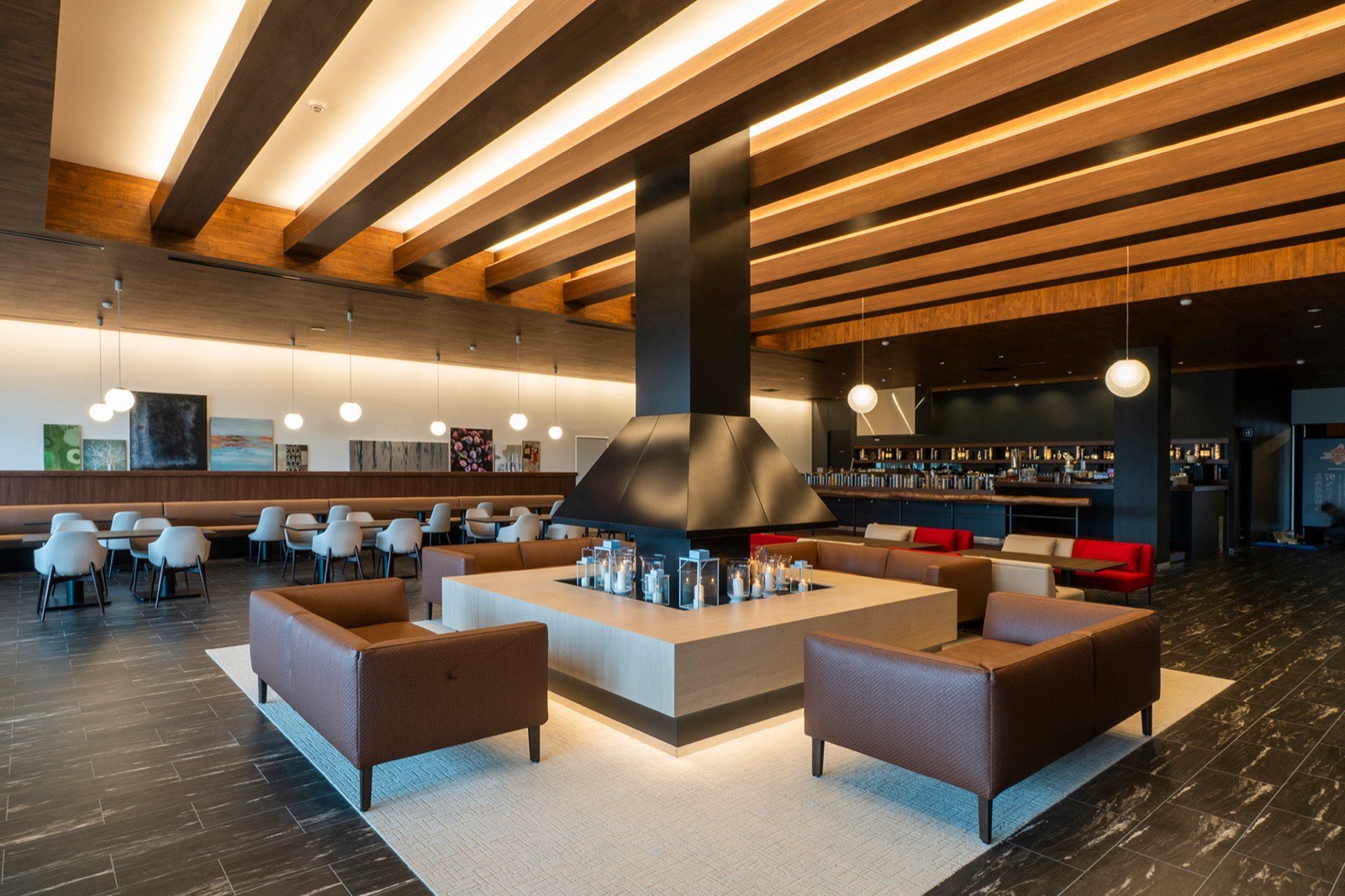 TORIFITO Hotel & Pod Niseko official site
957 reviews at 8.6 out of 10, the largest sample in Kutchan by a wide margin, at ¥293,040 for five peak nights. A pod hotel, which is the format that makes the town's price advantage largest — and it is in the part of town the railway actually serves.
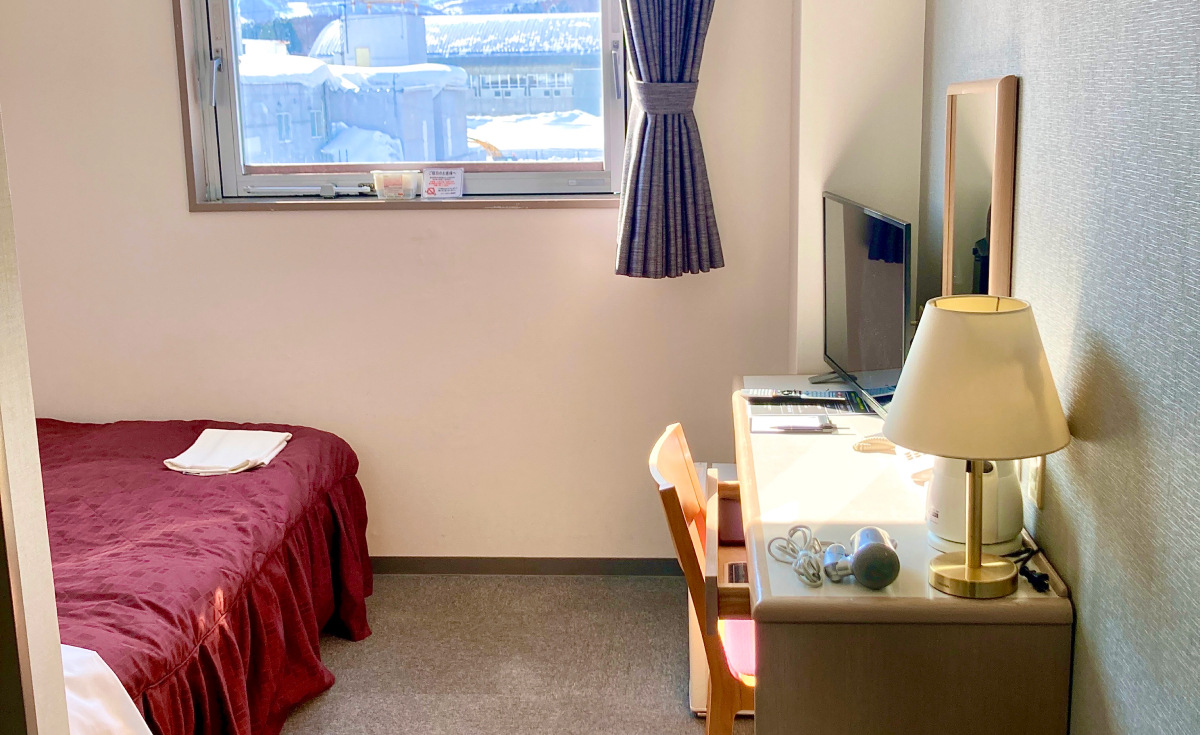 Smart Hotel Kutchan official site
A plain business hotel at ¥152,550 for five peak nights, about ¥30,500 a night, across 219 reviews at 7.9 out of 10. Nobody books this for the room. They book it because the same week uphill costs several times as much.
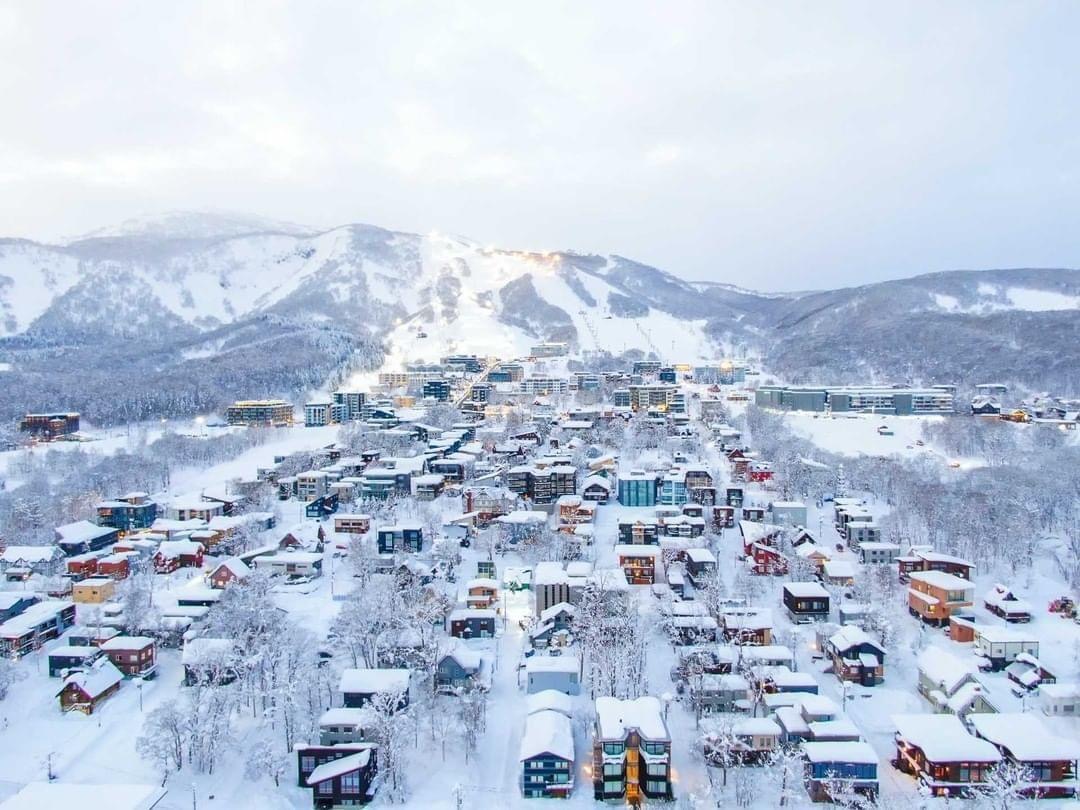 STAY RESORT NISEKO official site
164 reviews at 8.2 out of 10 and ¥135,600 across five peak nights — roughly ¥27,100 a night, one of the lowest totals in the valley with a review sample worth reading.
The thing to check before you book flights
Arrival time, against the last departure. The ski bus departures are daytime, and the last one on the previous season’s timetable left in the afternoon. Rail is limited. An evening arrival at New Chitose can leave you with no scheduled way to Niseko that night — a private transfer, or a hotel near the airport and a morning start.
This is a flight-booking decision, not a ground-transport one, and it is much cheaper to solve before you buy the ticket than after.
Work backwards, not forwards. Find the current season’s last departure from the airport, subtract an hour for baggage reclaim and finding the counter in a terminal you have never been in, and treat the result as your latest acceptable landing time. Flights that land after it are not cheaper flights; they are flights with an unbudgeted night attached.
If your options are genuinely limited — a long-haul connection that only lands late, or a public holiday schedule — the three ways out are, in ascending order of cost: a night near the airport and a first bus in the morning, a private transfer booked in advance, or a night in Sapporo, which at least turns the problem into an evening rather than a corridor.
The valley opens at three and closes at ten
Ground transport is only half the arrival problem. The other half is what time the building lets you in, and in Niseko that is remarkably uniform.
Of the ninety-one properties the Japanese booking platform documents in detail, 78 check in at 15:00. Eight check in at 14:00, four at 16:00, and exactly one at 13:00. Going the other way, 71 check out at 10:00, sixteen at 11:00 and four at noon.
Now set that against the bus. The airport service is listed at about two hours fifty-six minutes to Niseko Annupuri, and the previous season’s departures ran from mid-morning to mid-afternoon. So a morning flight onto the first bus puts you at the door well before the door opens, and a later flight onto the last bus puts you there after dark. There is no departure that lands you neatly at three.
Given the choice, arrive early. Turning up ahead of check-in at a staffed hotel is a non-problem — bags go behind the desk and you eat lunch. Turning up ahead of check-in at a whole house with a key box and nobody on site is a real one, and it is the single most common way a group’s first day in Niseko goes wrong.
Departure morning gets planned even less. A 10:00 check-out against an afternoon bus is four or five hours of a travel day carrying everything, in a village with nowhere particular to sit. The exceptions are all at the top of the market: the four properties here that let you stay until noon are all hotels.
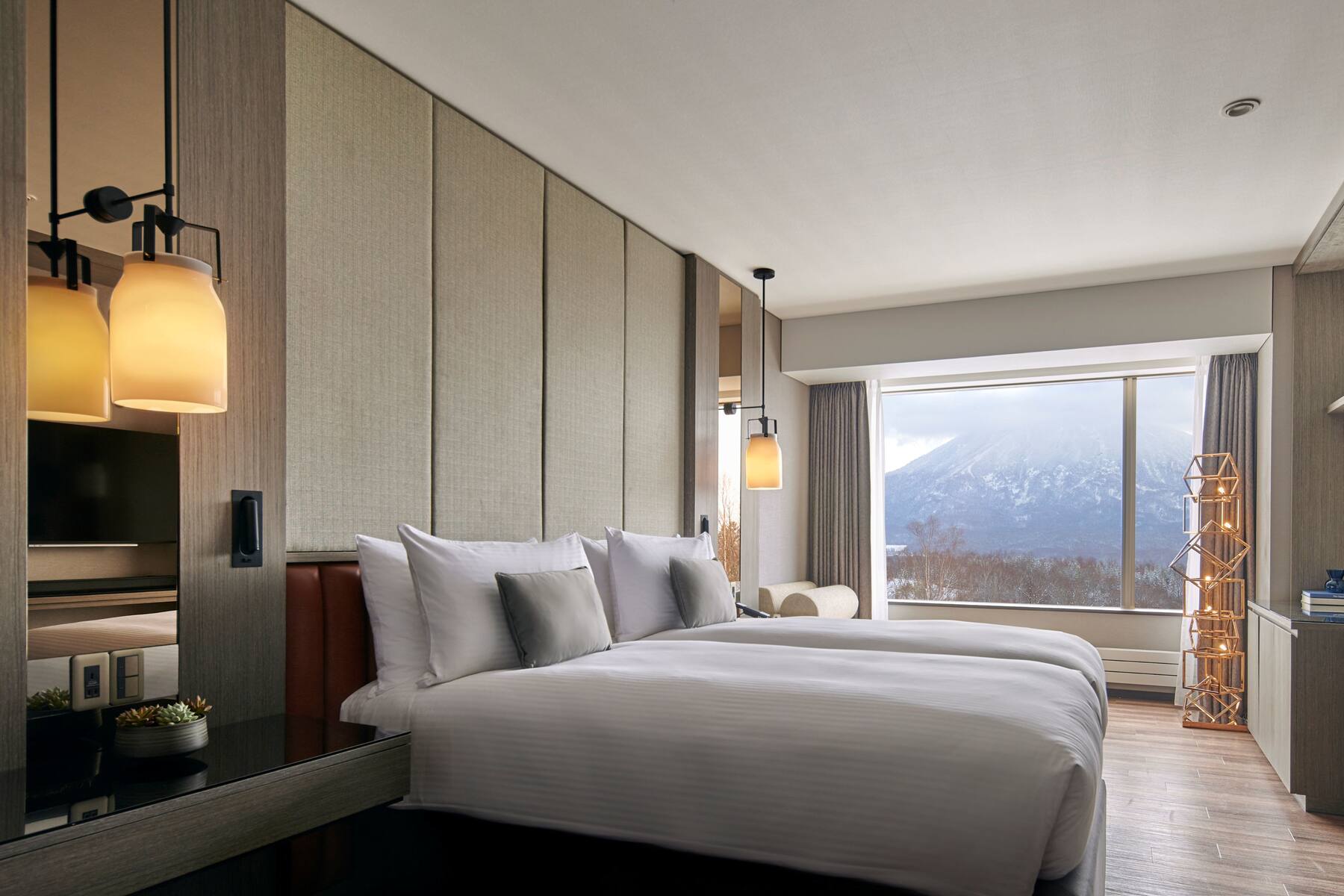 Hinode Hills Niseko Village official site
Niseko Village, 202 reviews at 9.0 out of 10, and one of only four properties here with a noon check-out. On a departure day with an afternoon bus that hour is worth more than most amenities — and Niseko Village is the area where there is least to do outside the building while you wait.
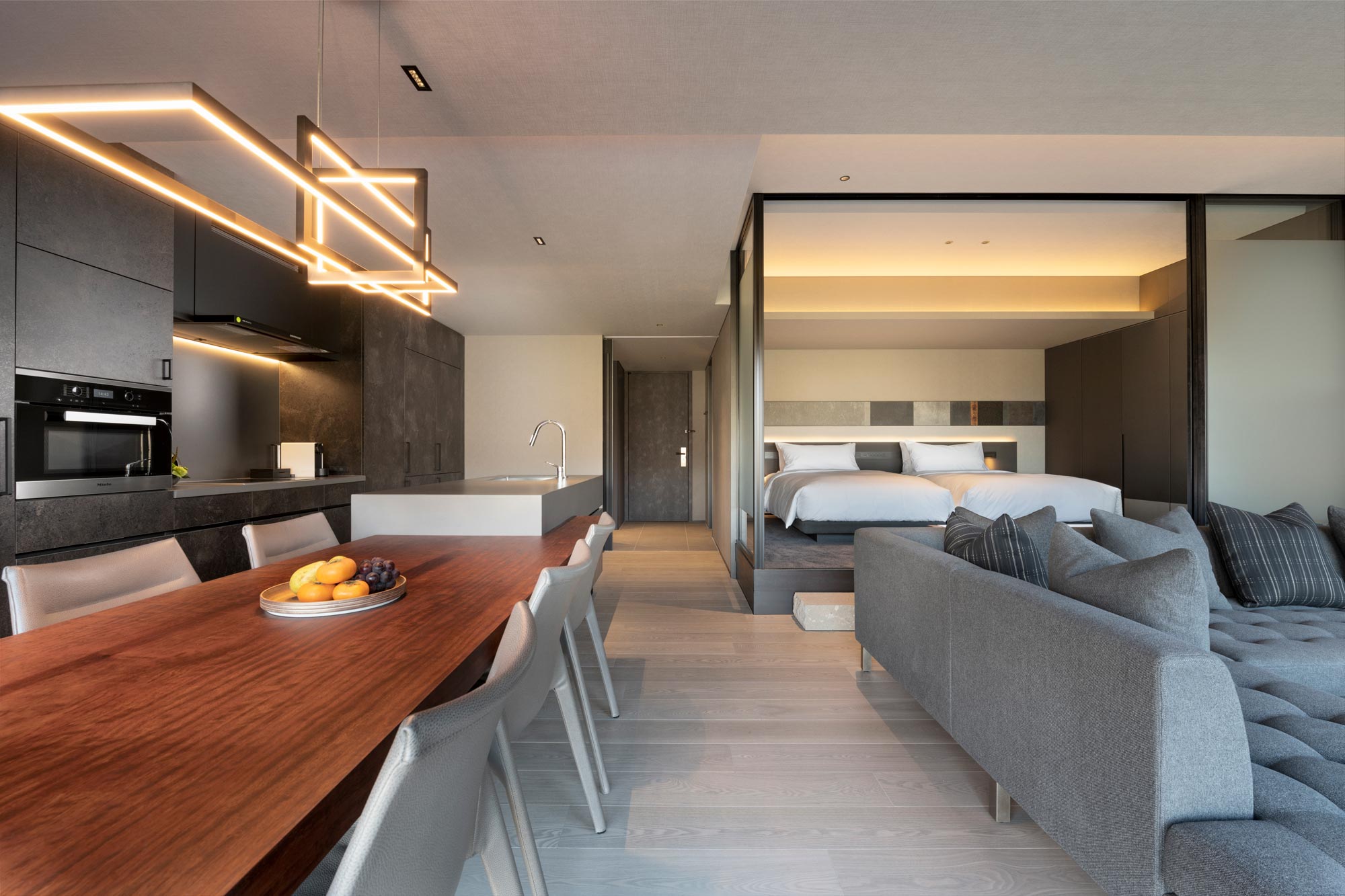 Sansui Niseko official site
Hirafu, 200 metres from the village centre, 95 reviews at 9.5 out of 10 and a noon check-out. The combination is the useful one on a departure day: two extra hours in the room, and a walk rather than a shuttle to wherever you are waiting.
What it costs, compared
For two adults travelling from New Chitose Airport, one way, on the previous season’s published fares:
| Two adults, one way | |
|---|---|
| Ski bus | ¥12,000 |
| Train, two legs | Fare varies by leg; buy at the station |
| Private transfer | Quoted per vehicle, not per person |
The bus arithmetic changes with group size. At two people it is the obvious answer. At five or six, a private transfer priced per vehicle starts to compete, and it removes the timetable problem entirely — which for a late arrival is the whole point.
Group size changes the accommodation arithmetic in the same direction and for the same reason. A whole house is priced per property, so the per-head cost falls with every extra person while a hotel room’s does not. The valley has 78 whole houses and chalets and 16 apartments, concentrated in Annupuri and Hirafu, and a party that is already paying per vehicle for the transfer is usually the party that should be pricing per property for the week. That case is worked through in Niseko for groups.
136 reviews at 7.9 out of 10 and ¥238,177 for five peak nights as a whole property in Kutchan. The economics only make sense with a full party, which is exactly the party for which a private transfer also makes sense.
 JL HOUSE Kutchan official site
100 reviews at 7.9 out of 10, ¥284,000 across five peak nights, and open in summer — one of the few whole houses here that takes green-season bookings, when the ski bus is not running at all.
Where you are going, once you have arrived
The bus timetables use Niseko Annupuri as their destination, which is not where most visitors sleep. Hirafu holds 148 of the valley’s 314 bookable places — more than the other four areas combined — and Kutchan town is a further stop again, on the railway rather than the mountain.
That gap between “arriving in Niseko” and “arriving at your accommodation” is the last leg people forget to plan. Ask your accommodation, before you book transport, which stop you should be getting off at and whether they meet it — several properties run their own pick-up from a village stop, and several do not.
Here is how the last leg differs by area.
Hirafu
The busiest destination and the one with the most services running to it. It is also built on a hill, which is the detail that decides your arrival: an address one minute above a lift and an address fifteen minutes below it are both Hirafu addresses, and the second one is a different proposition with luggage in the dark. Ask for the nearest bus stop by name, not for the walking time.
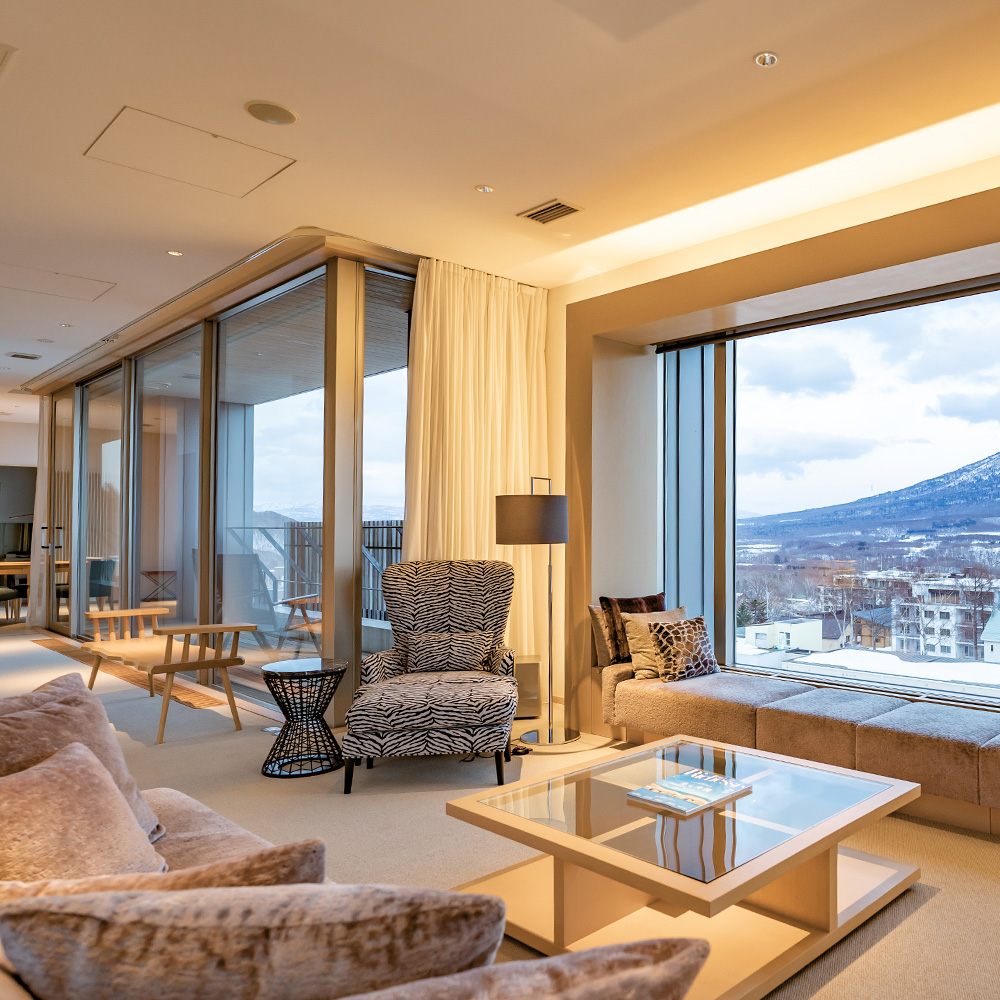 Chalet Ivy Hirafu, Niseko official site
544 reviews at 9.3 out of 10 — the most-reviewed stay in Hirafu — at ¥586,000 for five peak nights. Central enough that the last leg is a short walk rather than a negotiation, which is part of what the Hirafu premium buys.
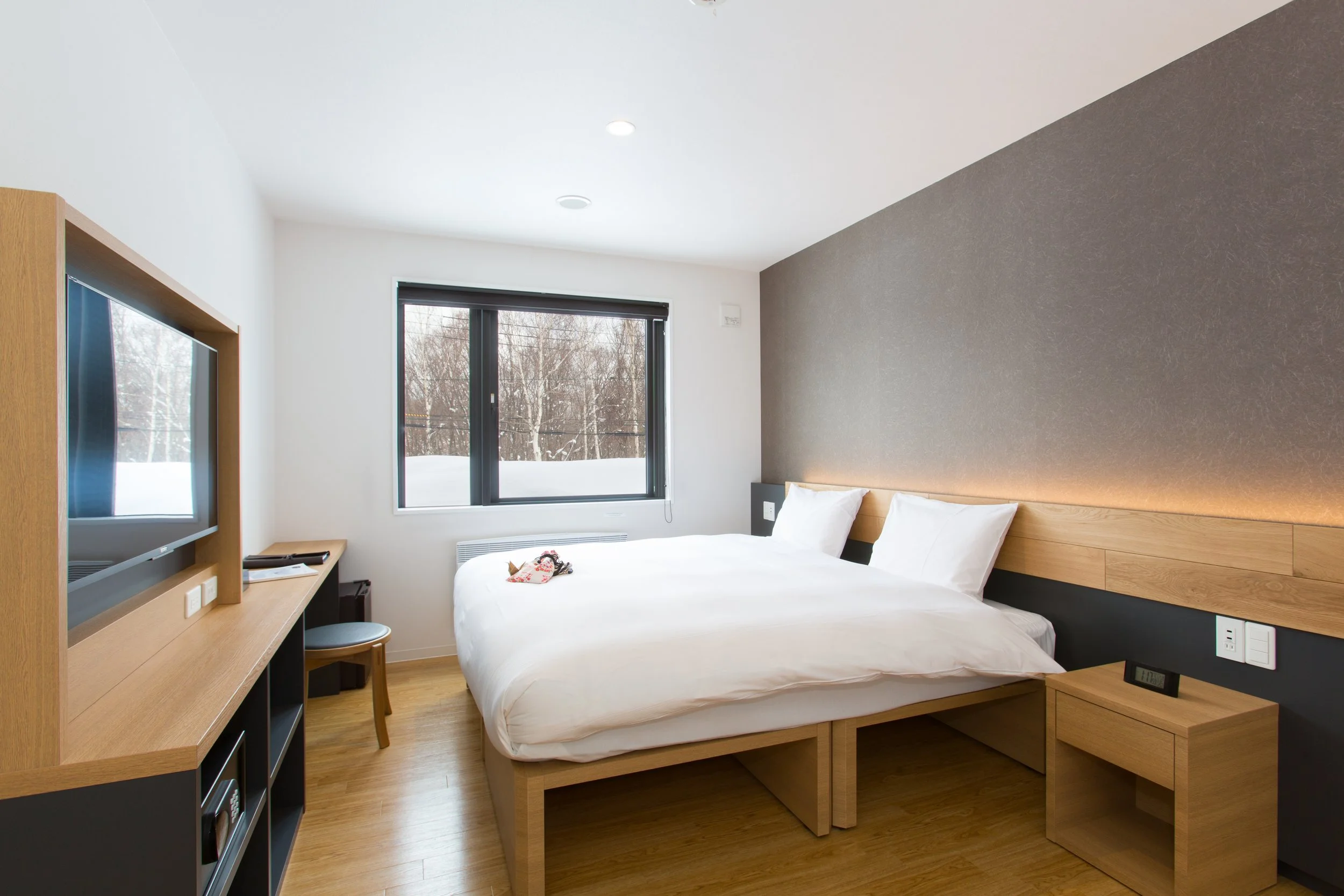 Always Niseko official site
454 reviews at 8.5 out of 10 and ¥270,580 across five peak nights, roughly ¥54,100 a night. A mid-market Hirafu hotel, and the kind of arrival where the village around it does the work your hotel would otherwise have to.
Annupuri and Konbu
The far end of the ski area, and the destination the bus timetables actually name. That makes the last leg simpler than Hirafu’s on paper — but Annupuri is spread out, nearly everything assumes a car or a booked shuttle, and it is about 4.8 km from central Hirafu. Arriving here is easy; moving around afterwards is the part to plan.
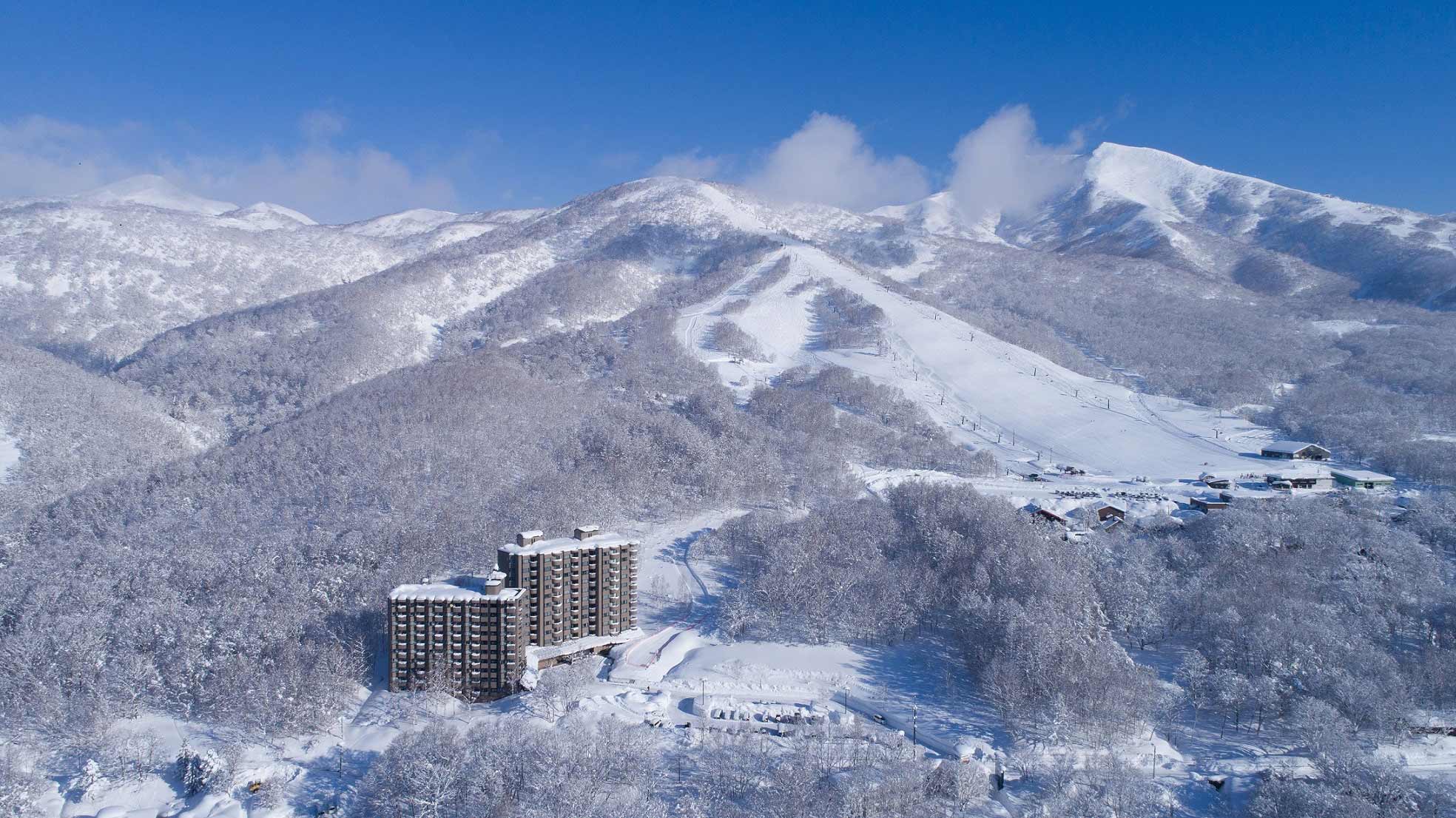 One Niseko Resort Towers official site
519 reviews at 8.2 out of 10 and ¥423,510 for five peak nights. The most-reviewed property on this side and the easiest Annupuri arrival for a first trip: large, signposted, and used to people turning up off a bus.
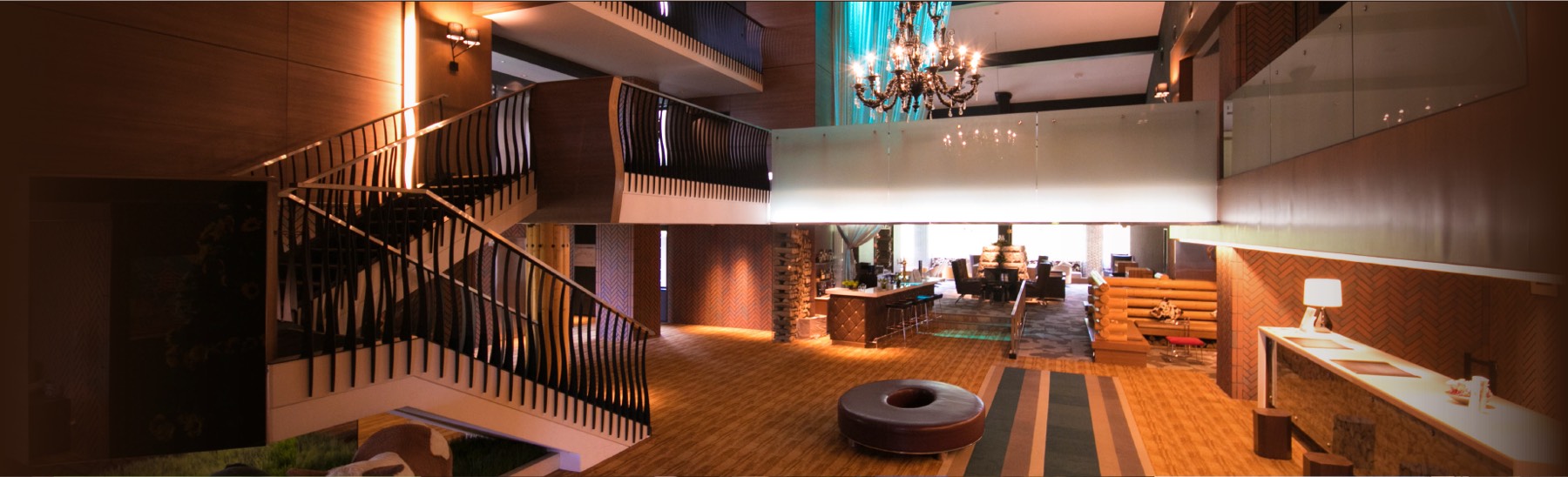 Niseko Northern Resort An'nupuri official site
404 reviews at 8.8 out of 10, and one of the valley's clearest examples of a hotel whose guest list is mostly domestic — it carries 1,253 reviews on the Japanese booking platform against 404 on the international one.
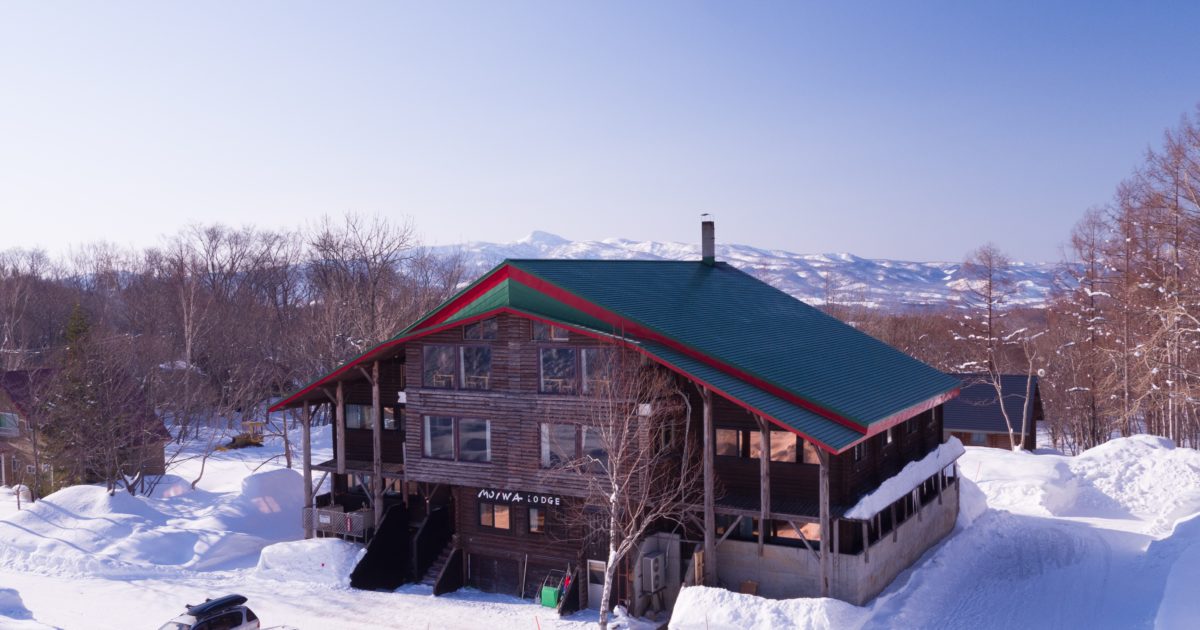 Moiwa Lodge official site
151 reviews at 9.0 out of 10 at ¥343,160 for five peak nights. Moiwa is its own small hill beside Annupuri, which makes it quieter still and makes the transport question sharper — confirm the pick-up before you travel, not after.
Niseko Village
Two or three hotels around the lifts, one operator, and the simplest arrival in the valley: the bus or the transfer puts you at the door and the day ends there. The corollary is that there is nothing outside the building, so if your flight lands late the hotel is also your only dinner option.
Hilton Niseko Village official site965 reviews at 8.1 out of 10 — the largest sample in Niseko — and open in summer, which most of the valley is not. For a late or awkward arrival it is the lowest-friction booking in the valley.
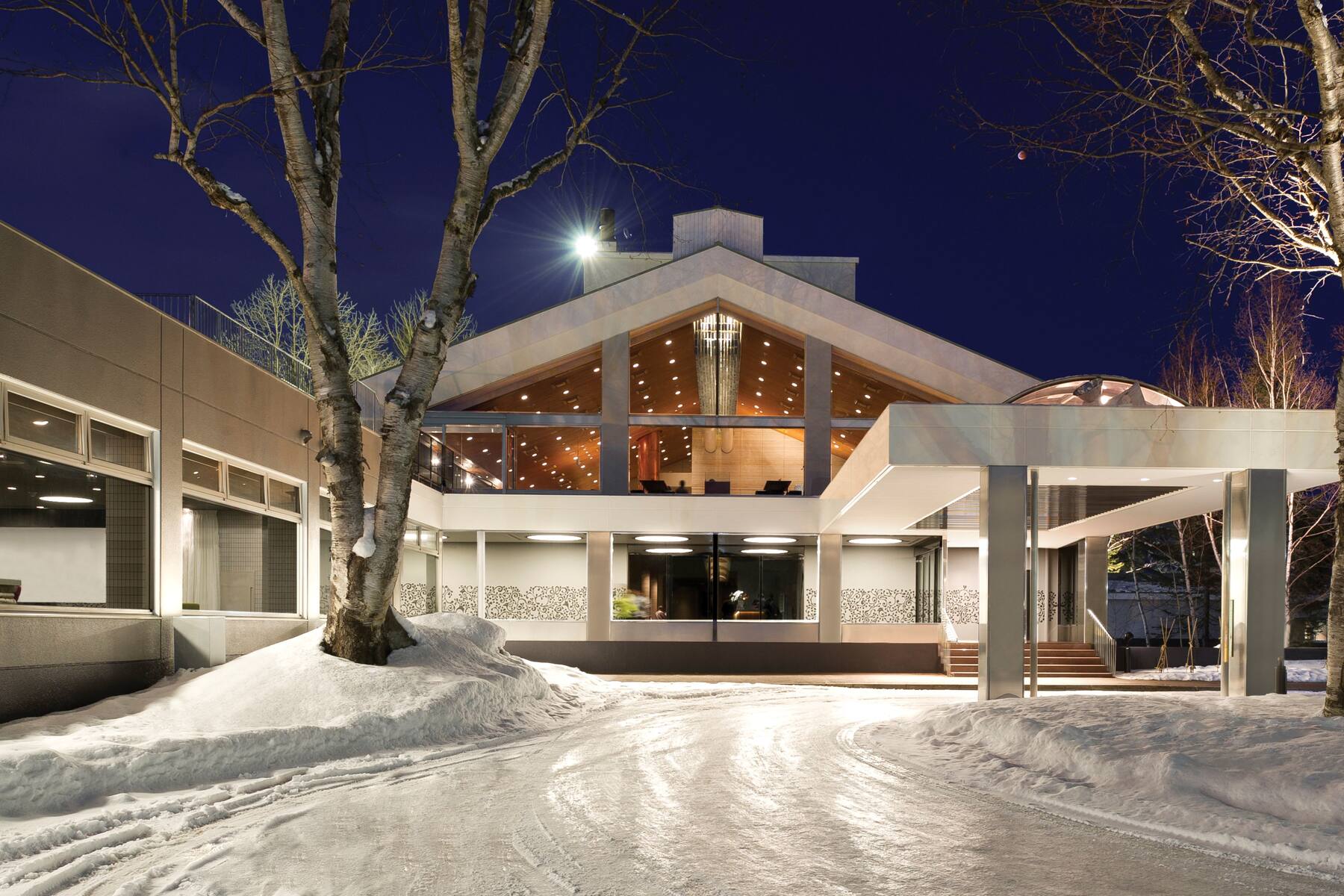 The Green Leaf Niseko Village official site
669 reviews at 8.2 out of 10 and ¥472,272 across five peak nights. The second-largest review sample in the valley, in the same cluster, which is what an area with one operator and a lot of rooms looks like in the data.
Hanazono
Six listings, no cheap end, and a median of ¥2,207,900 for five peak nights. Arrival is generally handled for you at this level, and if it is not, ask before booking rather than assuming — the area has no public street life to fall back on.
 Nikko Style Niseko HANAZONO official site
295 reviews at 9.0 out of 10, the largest review sample in Hanazono, at well under half the area's median five-night total. The nearest thing the area has to a mid-market arrival.
How far apart the areas actually are
“Niseko” covers about six kilometres of road, and the numbers are worth having before you plan the last leg. Measured from the Hirafu village centre, the properties written up on this site sit at:
| Area on the listing | Distance from Hirafu centre |
|---|---|
| Hirafu | 0.05 – 3.2 km |
| Niseko Village | 2.2 – 3.4 km |
| Hanazono | 2.9 – 3.2 km |
| Annupuri and Konbu | 2.3 – 6.1 km |
| Kutchan town | 4.6 – 6.0 km |
Read from property listings, 9 September 2026.
Two things fall out of that, and both cut against the way people plan.
A Hirafu address is not a distance. The spread inside Hirafu is wider than the gap between Hirafu and Niseko Village, and several properties filed as Niseko Village sit closer to the Hirafu crossroads than several properties filed as Hirafu. The area name on your booking confirmation is not telling you where you will be standing when the bus pulls away.
And the valley is small. Kutchan town, the base everyone treats as remote, is six kilometres out at the furthest. That does not make the daily bus optional — with equipment, in February, in the dark, five kilometres is a decision and not a walk — but it does mean that getting between any two parts of Niseko is a timetable problem rather than a distance problem.
Which changes the question to ask your accommodation. Not which area it is in. Which stop it is nearest, by name, and how far the walk is from that stop in the dark with a ski bag.
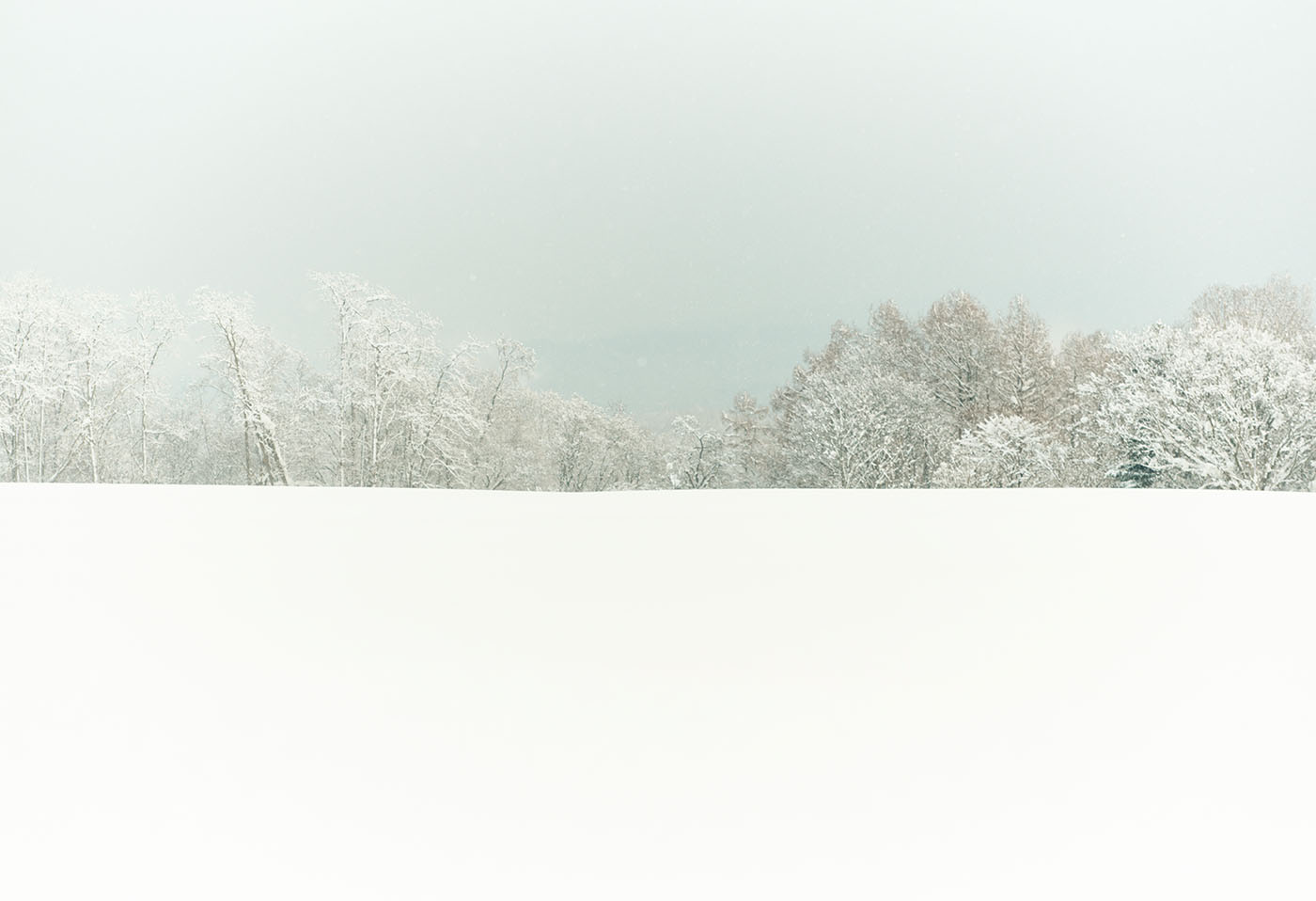 Miru Niseko official site
510 reviews at 9.4 out of 10 and ¥361,242 for five peak nights — and 2.9 km from the Hirafu crossroads, which is further out than the Hilton in Niseko Village. A Hirafu address at the far end of what a Hirafu address can mean, and a good reason to ask for the number rather than the name.
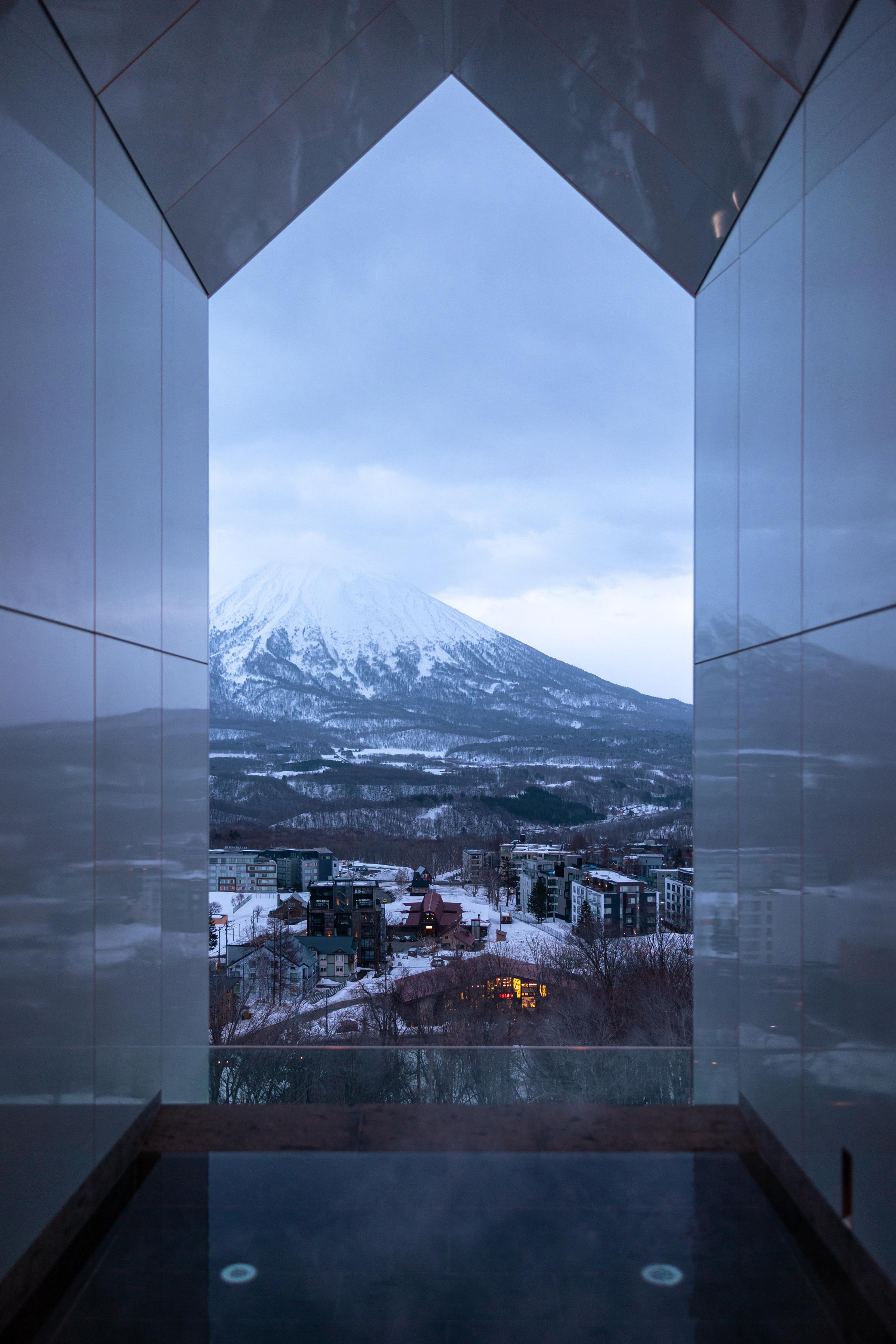 MUWA Niseko official site
The other end of the same scale: 50 metres from the village centre, 57 reviews at 9.1 out of 10 and ¥1,375,000 for five peak nights. Between this and the property above there is nearly three kilometres, and both are sold to you as Hirafu.
Sapporo, and whether to break the journey
There is a third shape to this trip that the two-options framing hides: land, sleep in Sapporo, and travel to Niseko in the morning.
It costs a night and it solves three problems at once. It removes the arrival-time constraint from your flight search entirely, which widens the field of affordable flights considerably. It puts the long ground leg at the start of a rested day rather than the end of an exhausted one. And it gives you a city evening, which is a real argument if you are coming a long way and the rest of the trip is a valley with one restaurant street.
The mechanics are straightforward: the ski bus runs from JR Sapporo as well as from the airport, listed at roughly three hours with two morning departures and priced as a ¥10,000 adult round trip. By rail, Sapporo to Otaru is about 32 minutes rather than the airport’s 72, so the train option also gets shorter from the city.
Against it: an extra hotel night, an extra set of luggage moves, and a morning departure that is early enough to feel like a travel day rather than a lie-in. For a five-night ski trip it is usually not worth it. For a late arrival, a large party, or a first visit to Hokkaido, it usually is.
Luggage, and the thing about equipment
The single variable that decides how bad any of these journeys feels is how much you are carrying, and it is the variable you have the most control over.
Renting skis or a board in Niseko rather than flying with them removes a hold bag, an oversize-baggage fee, a transfer at Otaru you would otherwise dread, and the walk from the bus stop to the door. The valley has been an international destination for two decades and the rental infrastructure reflects that. If you are travelling with children, the case is stronger again, because children’s equipment is the awkward kind: bulky, low-value, and carried by an adult who is already carrying a child.
The counter-argument is real for people with their own boots, which are the item worth bringing and the item that fits in a cabin bag. Everything else is a question of whether you would rather pay for it in yen or in the last hour of your travel day.
Once you are there
A shuttle network links the four ski areas and the villages below them, and most visitors never need anything else. Frequency and last departures change season to season, so treat the timetable you find in a blog post as out of date and check the current one.
Two habits make the network work. Check the last run before you commit to an evening on the other side of the valley — it is earlier than the bars close, every year, without fail. And if you are staying somewhere that runs its own pick-up, book it when you book the room rather than on the day, because the seats are finite and February is when everyone wants them. One more habit worth knowing: the inter-area shuttle is not free transport on its own terms — boarding it with a scanned lift pass uses up a day or an hour of that pass, even on a day you do not ski. Niseko United covers the mechanics in full.
A car is not required and, in deep winter, is a liability if you have not driven on snow. The case for one is set out below.
If you are thinking about a car
The valley does not require one, and the case for and against is mostly about where you sleep rather than about driving.
One number is worth having first: parking is recorded for 48 of the 91 Niseko properties the Japanese platform documents in detail, and it is not stated on the international listing at all. In other words, roughly half the buildings here publish a parking fact somewhere and the platform most visitors book on is not the one that carries it. If you are hiring a car, that is a question for the property rather than an assumption from the listing — particularly in Hirafu, where the buildings are close together and the land is not cheap.
The rest of the case is seasonal. The shuttle network covers the four ski areas well enough that most winter visitors never miss having a car. It earns its place if you are based in Kutchan town, if you want onsen outside the valley on your own schedule, or if you are travelling in the green season, when the ski bus does not run and the shuttles largely stop.
If you do drive, three things decide the week and none of them is the rental rate: winter tyres, whether the parking is actually cleared, and how comfortable you are reversing on packed snow in the dark.
Annupuri, 4.8 km from Hirafu, 100 reviews at 9.0 out of 10 and ¥90,000 for five peak nights — the cheapest property on this site. At that distance the transport arrangement is the whole question, and it is the one to settle before the rate persuades you.
Getting here outside the ski season
The bus is the whole difficulty. It is a winter service, so from roughly April to November the direct link people plan around simply does not exist, and the route becomes the railway or a car.
That is one reason the green season concentrates where it does. Of the fifty-four places in the valley that take summer reservations, 26 are in Annupuri and 17 in Kutchan town — Kutchan being the one area with a station, which stops mattering in February and starts mattering a great deal in August. Hirafu keeps nine. None of Hanazono’s show up on the platforms we track, though its operator does market some of the same properties directly for summer.
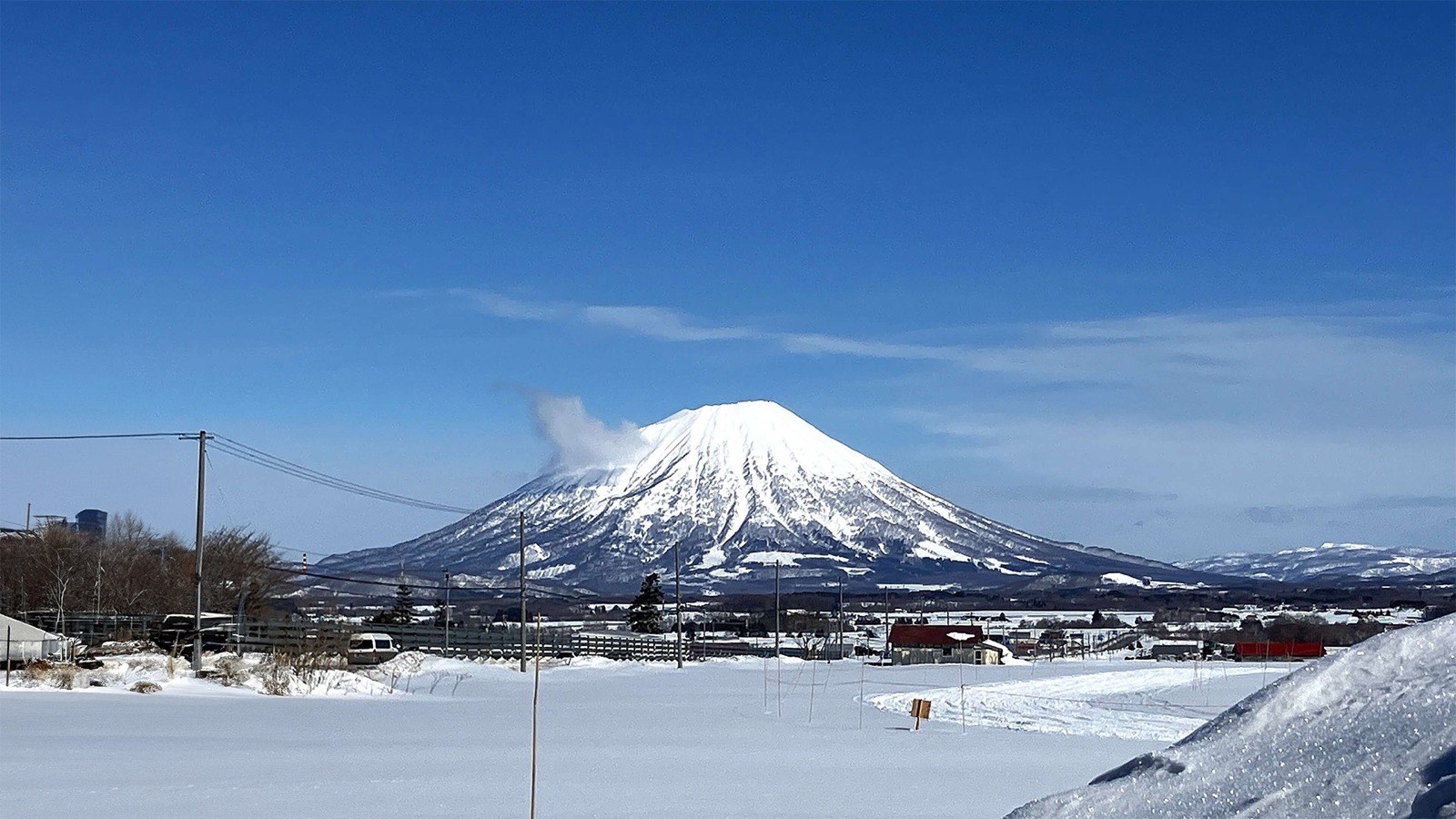 Hotel Login Niseko official site
71 reviews at 9.1 out of 10, in Kutchan, and open in summer. In the green season the town's railway station stops being a compromise and becomes the reason to be there.
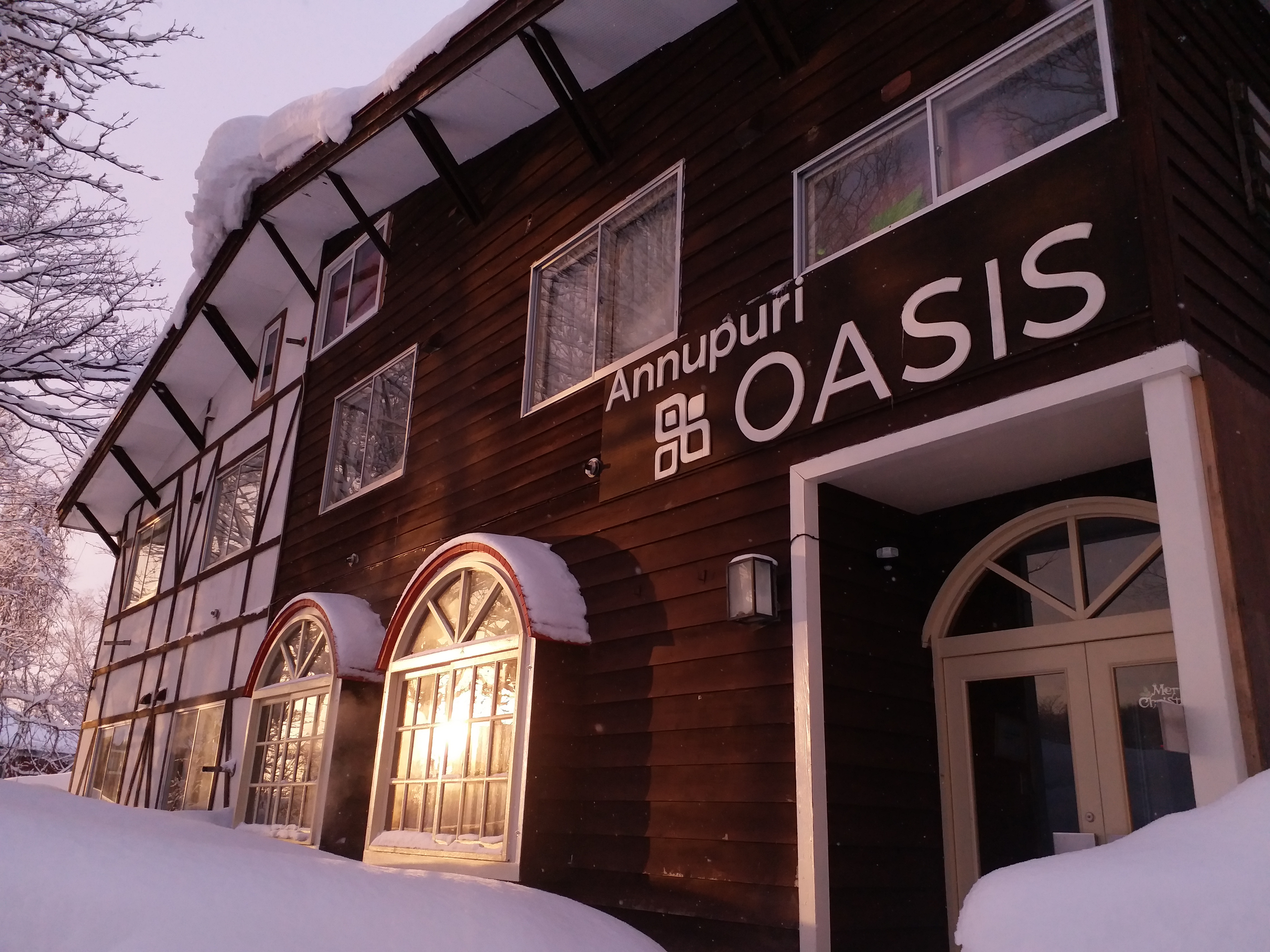 Annupuri Oasis Lodge official site
122 reviews at 9.3 out of 10 at ¥215,000 for five peak nights, and open in summer. Small lodges like this one carry the green season while the ski-in properties are closed.
The full picture of what is open, where, and at what price is in Niseko in summer.
The answers, condensed
- Winter, two people, ski luggage. The ski bus from New Chitose. Book it, and check the current season’s last departure before you book the flight.
- Winter, five or six people. Price a private transfer per vehicle. It usually competes, and it deletes the timetable problem.
- Staying in Kutchan town. The train. The station is the reason you chose the town.
- Landing in the evening. A night near the airport, or a private transfer arranged in advance. Do not assume you will improvise something at eleven at night in February.
- Travelling in summer. There is no ski bus. Plan around the railway or a car, and check what is open before anything else.
If you are travelling outside the ski season, the ground transport is only half the problem. These are the stays that take summer bookings.
Hilton Niseko VillageNiseko VillageOnsen¥101,163 (~$640)/night · 5-night peak avg Chatrium Niseko JapanHirafu¥162,000 (~$1,025)/night · 5-night peak avgHinode Hills Niseko VillageNiseko Village¥173,220 (~$1,096)/night · 5-night peak avgAnnupuri Oasis LodgeHirafu¥43,000 (~$272)/night · 5-night peak avg
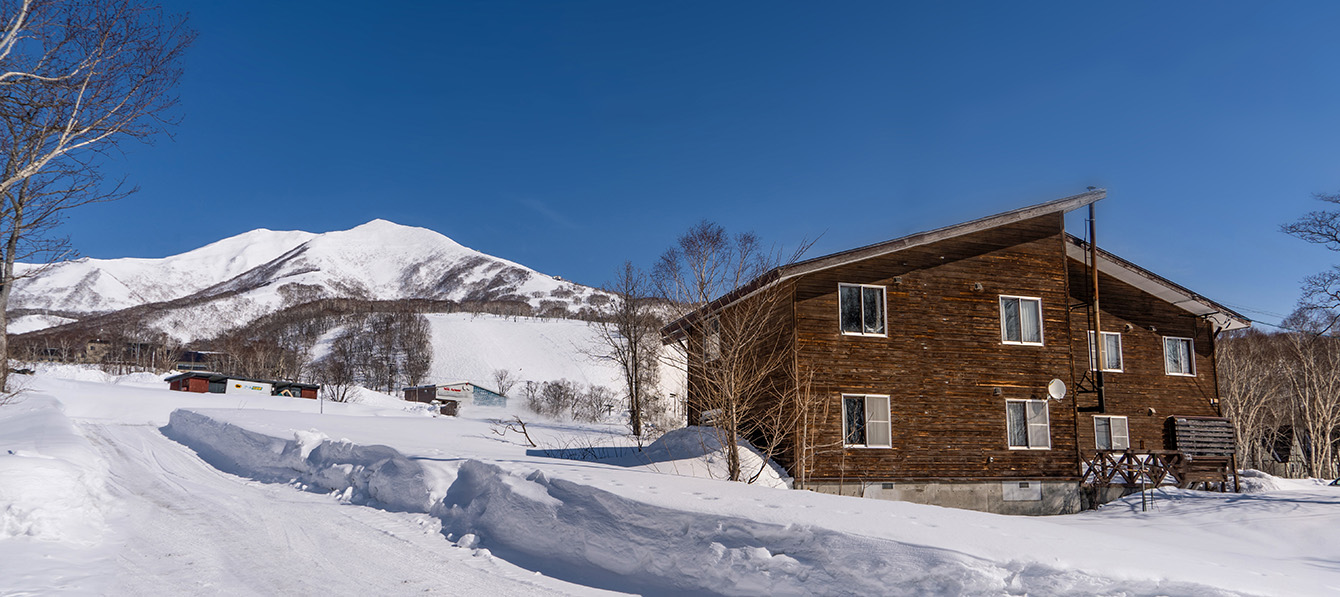 Annupuri Mountain View LodgeAnnupuri¥43,000 (~$272)/night · 5-night peak avgJL HOUSE KutchanKutchan¥56,800 (~$359)/night · 5-night peak avg
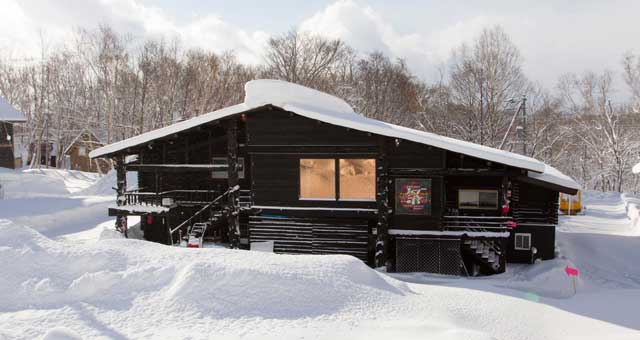 Niseko Backcountry LodgeAnnupuri¥31,680 (~$201)/night · 5-night peak avgHotel Login NisekoKutchan¥74,592 (~$472)/night · 5-night peak avg
Questions
- Which airport do you fly into for Niseko?
- New Chitose Airport (CTS), the main airport for Hokkaido, near Chitose south-east of Sapporo. There is no airport at Niseko. Everyone arrives at New Chitose and travels roughly three hours west. Source (read 2026-09-10)
- How long does it take to get from New Chitose Airport to Niseko?
- The seasonal ski bus to Niseko Annupuri is listed at approximately 2 hours 56 minutes. By train the two legs are roughly 72 minutes to Otaru and about 90 minutes onward, plus the wait between them, so allow appreciably longer. Source (read 2026-09-10)
- How much is the bus from New Chitose Airport to Niseko?
- The Chuo Bus ski bus is listed at 6,000 yen one way for an adult and 3,000 yen for a child. From Sapporo the fare is quoted as a round trip at 10,000 yen adult, 5,000 yen child. Source (read 2026-09-10)
- Does the Niseko ski bus run all year?
- No. It is a winter service with a published operating period each season, and outside those dates it does not run at all. Check the current season's dates before you build a plan around it — the previous season ran from mid-December to late March. Source (read 2026-09-10)
- Can you get to Niseko by train?
- Yes, via Otaru and Kutchan, and the operator's own page warns that services are limited. It is a real route rather than a convenient one: two legs, a transfer, and a timetable that does not bend to your flight.
- Should I take the train or the bus to Niseko?
- Bus, for a first trip with ski luggage in winter. It runs direct, it is timed around flights, and it puts you at your accommodation area rather than at a station you then have to leave. The train earns its place if you are staying in Kutchan town, travelling outside the bus season, or you want to see the coast.
- Do I need a car in Niseko?
- No, and in deep winter it is a liability unless you are used to snow driving. A shuttle network covers the four ski areas and the villages. A car helps for onsen outside the valley and for staying in Kutchan town.
- How far is Sapporo from Niseko?
- About three hours by the seasonal ski bus, listed with two morning departures from JR Sapporo. By train it is Sapporo to Otaru in roughly 32 minutes, then about 90 minutes onward. Source (read 2026-09-10)
- Can I get to Niseko at night?
- Not reliably. The ski bus departures are daytime, the last one leaving in the afternoon, and rail services are limited. A late-arriving flight usually means a private transfer or a night near the airport, and this is the single thing most worth checking before you book flights.
- What is the last bus from New Chitose Airport to Niseko?
- On the previous season's timetable the latest listed departure was mid-afternoon. Treat that as the shape of the day rather than the number: confirm the current season's final departure against your flight arrival, and allow for baggage. Source (read 2026-09-10)